Sound familiar?Kitchener
- The call
- The accountant's office keeps a decade of client files in cardboard boxes because the only safe in the building is a small drawer safe meant for a laptop, nowhere near large enough for binders of paper.
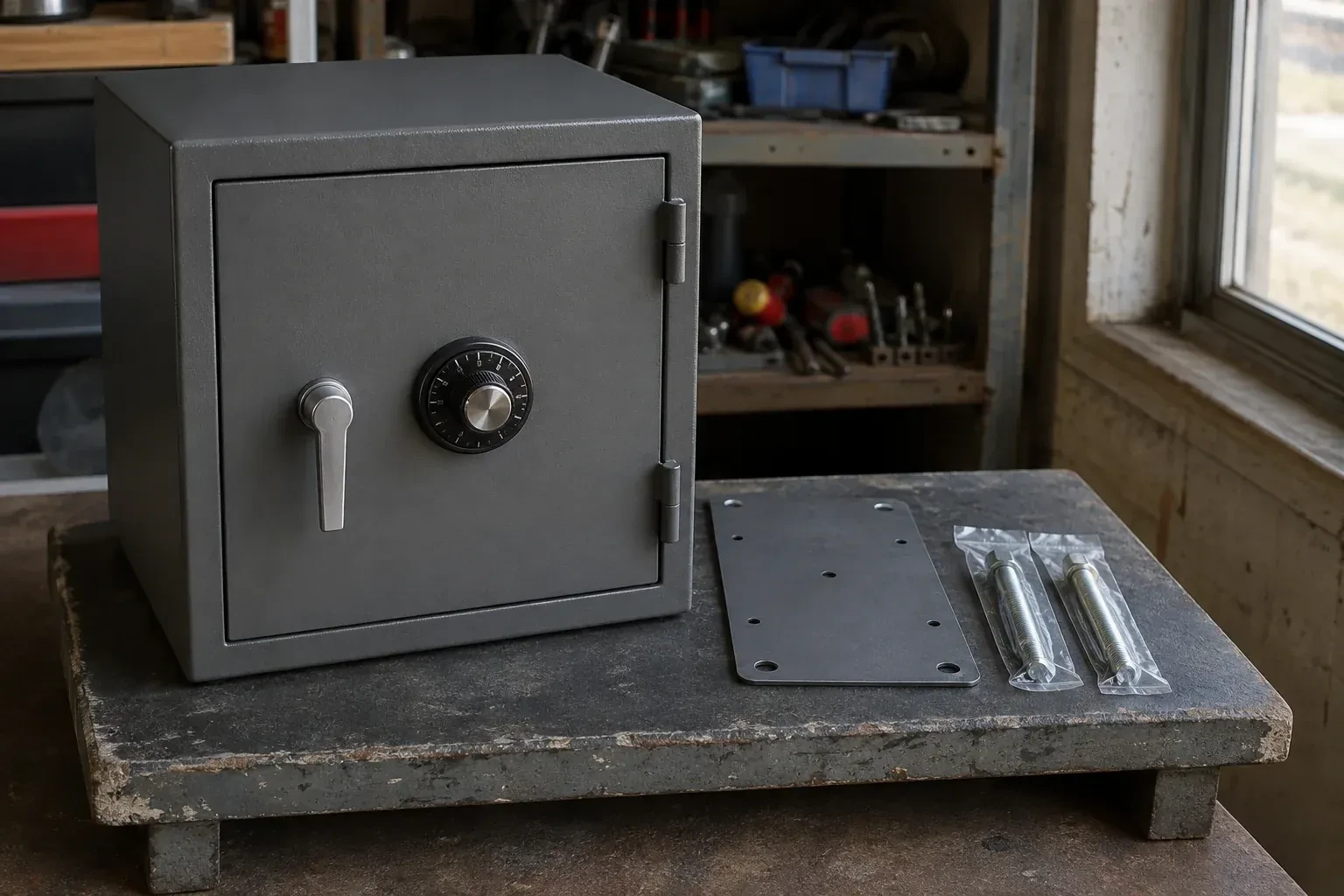
Behind the filing cabinets sits a heavy floor safe nobody ever bolted down, left exactly as the last owner set it. It opens fine, but a determined pair of hands could simply tip it into a van.
A safe carries two separate report cards, and neither one predicts the other. Some burglary ratings describe how long a determined attempt with tools takes to force the door, timed by an independent lab; others are construction classifications based on steel thickness rather than a timed attack. A fire rating describes how hot the interior gets in a timed furnace test, and it matters for paper and for cash, though burglary resistance is usually the bigger concern where cash is involved. Choosing between them, or finding a unit built to both standards, is the first real decision in an installation, and it depends on what will sit inside the safe.
Sound familiar?Kitchener
Safe Installation & Servicing · Kitchener
Scene 1
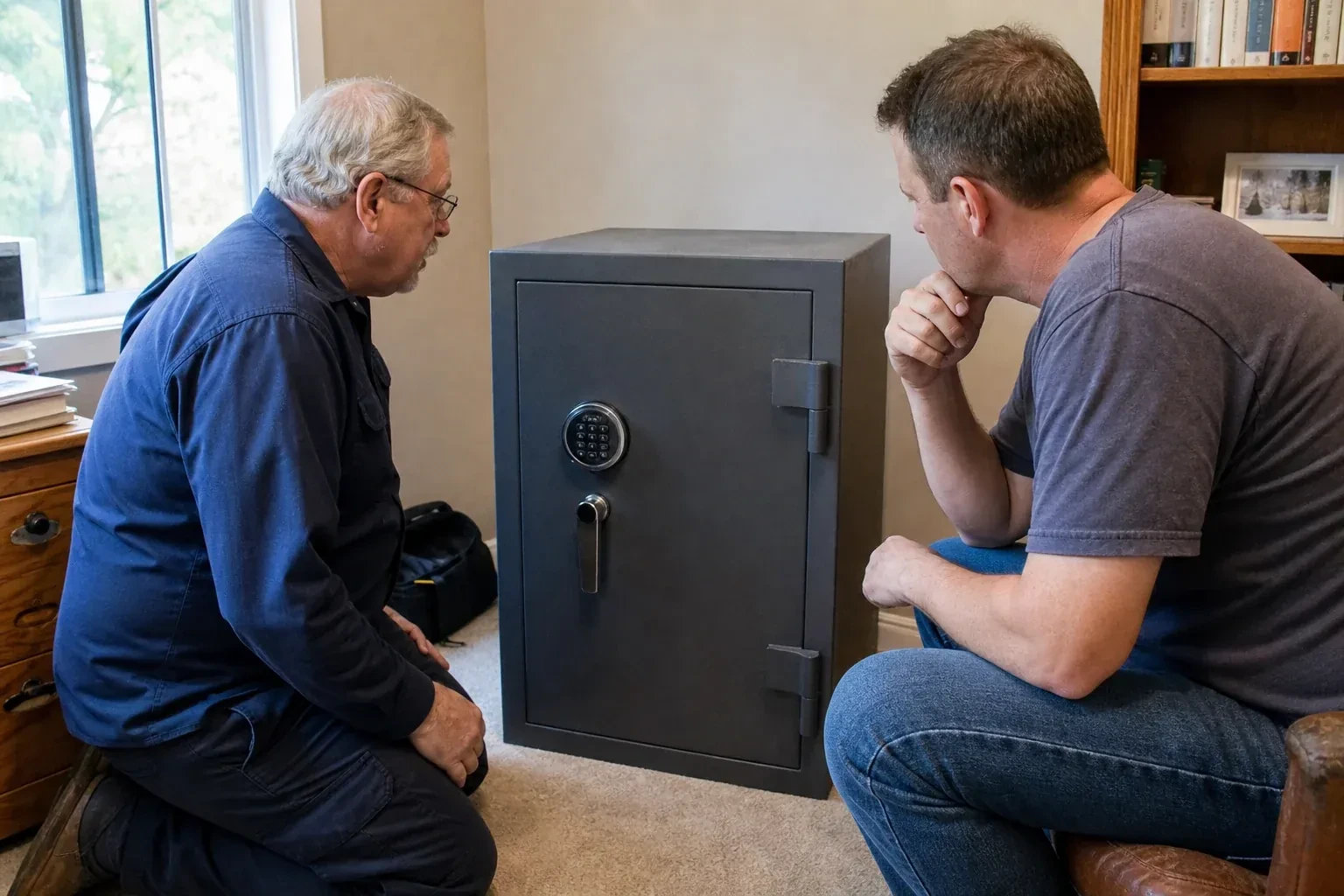
A safe tucked into a spot nobody can reach easily gets used less often than intended, and one left in plain view of every visitor invites attention it does not need. The locksmith talks through how often the safe will be opened, by how many people, and at what time of day, since a till safe opened every hour wants a different position than a document safe opened twice a year. Concealment behind a panel or inside a closet is weighed against how practical daily access needs to stay.
Scene 2
A wood subfloor calls for a different approach, since a bolt into surface plywood alone pulls out under real weight. The locksmith locates the floor joists beneath the finished surface, drills pilot holes through the subfloor into solid framing, and drives long lag bolts or structural screws with washers that spread the load across the wood. Carpet, vinyl, or laminate over the subfloor is worked around rather than through wherever possible, so the finished floor is left as close to undisturbed as the anchoring allows.
Scene 3
An electronic lock gives some warning before it dies, usually a beep or a flashing light during normal use, and treating that warning as a job to do that same week rather than eventually is what keeps a dead battery from turning into a locked-out morning. Keeping a spare battery of the correct type near the safe, rather than searching for one after the warning starts, closes the loop. The mechanical override key behind the keypad is worth keeping somewhere separate from the safe itself, not taped underneath it.
What shapes the quoteHeritage Park Locksmith Specialists
FeesSame any hour
Solid concrete is the most straightforward surface, taking a masonry anchor bolt directly. A wood subfloor works too, provided the anchoring reaches into the floor joists beneath the surface layer rather than just the plywood or the flooring on top. Tile is the awkward case, since a bolt through it tends to crack the surrounding tiles, and an alternative anchoring point or a different spot in the room is usually the better route there.
Servicing works through the same checks as a new installation in reverse: the bolt-work is opened, cleaned, and lubricated, the lock is tested and adjusted if it binds, the anchoring underneath is confirmed or added if it was never done, and batteries are replaced if the lock is electronic. Many older safes have solid steel bodies that outlast the mechanism inside them, which makes servicing a practical route rather than starting over.
Yes, on both mechanical and electronic locks. A mechanical dial is reset to a new combination by working inside the lock body, while an electronic keypad is simply reprogrammed at the keypad or through its service menu. Changing it after a change in staff, a move, or simply out of caution is routine work rather than anything unusual, and it can be arranged as its own visit.
WaterlooOntario
Safe Installation & Servicing · Bridgeport, Heritage Park, Rosemount, Stanley Park
Every square is one home in a hundred.
On-site assessment
Behind the filing cabinets sits a heavy floor safe nobody ever bolted down, left exactly as the last owner set it.
(226) 806-0416, open 24/7.
On-site assessment preferred · (226) 806-0416, open 24/7