Skip to content
HeritagePark Locksmith SpecialistsOpen 24/7 (226) 806-0416
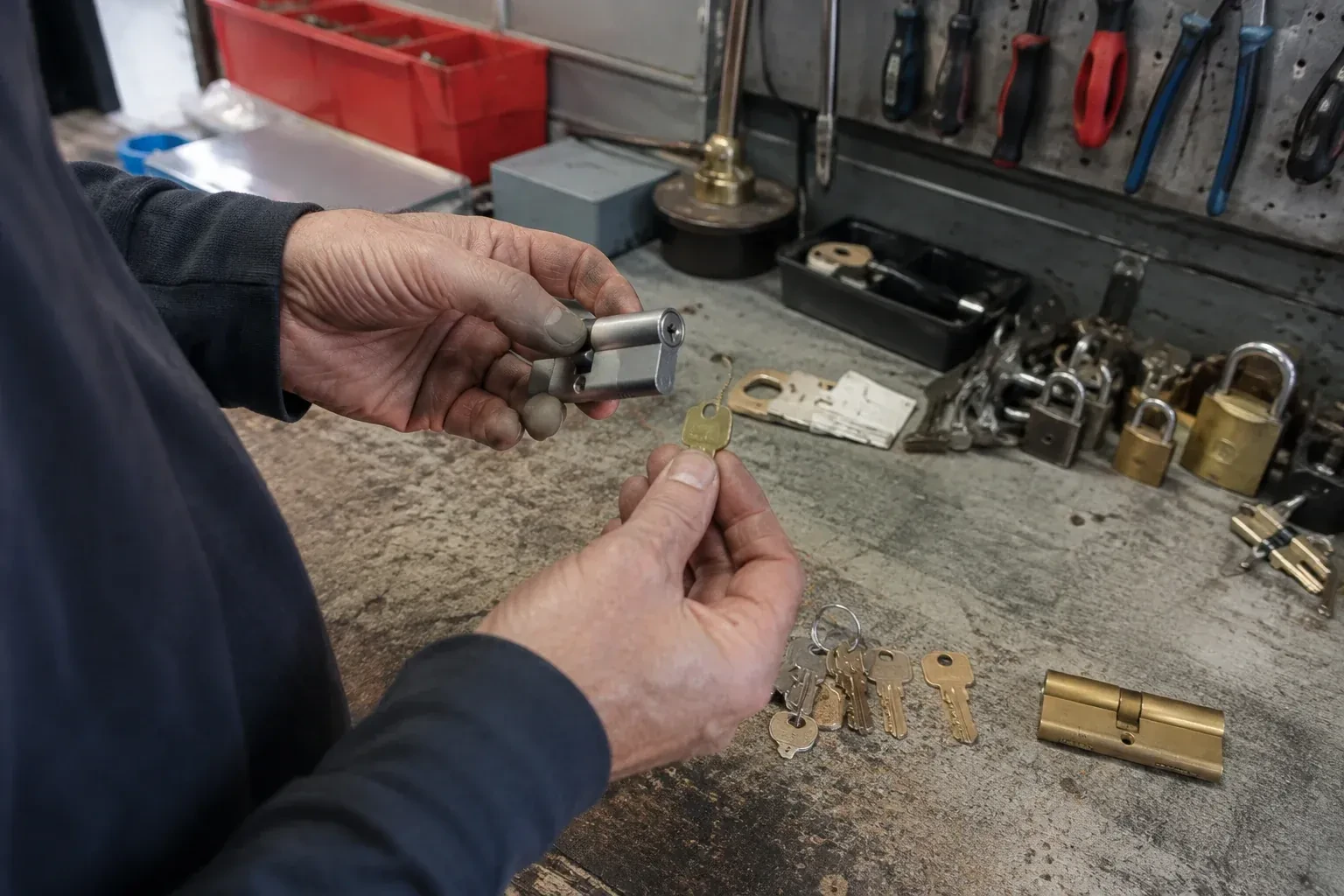
Hands holding a silver-colored lock cylinder and a brass-colored key above a workbench with padlocks, keys and tools. — Master Key System Design, Kitchener

Commercial · Kitchener

Master Key System Design

A property manager taking over a small commercial building inherits a shoebox of keys with no labels and no chart. Some open the mechanical room, some open vacant units, and a few do not seem to match anything currently on the property at all.

In plain words

What a business actually takes away from a master key system project is a documented chart, not just a set of new keys. Every level is recorded against the doors it opens, every key is marked by role rather than by address, and the cylinders have been tested individually and as a group before handover. That record becomes the reference for everything that follows: adding a new employee, handling a departure, or working out exactly what is affected if one key later goes missing, instead of guessing from a label on a keyring.

Sound familiar?Kitchener

The call
A new hire at the shop gets handed whatever spare key happens to be in the drawer, and it turns out to open the stockroom, the back office and the safe room all at once. The owner realizes nobody actually decided who should open what.

NextHow the visit goes

Master Key System Design · Kitchener

How the visit goes

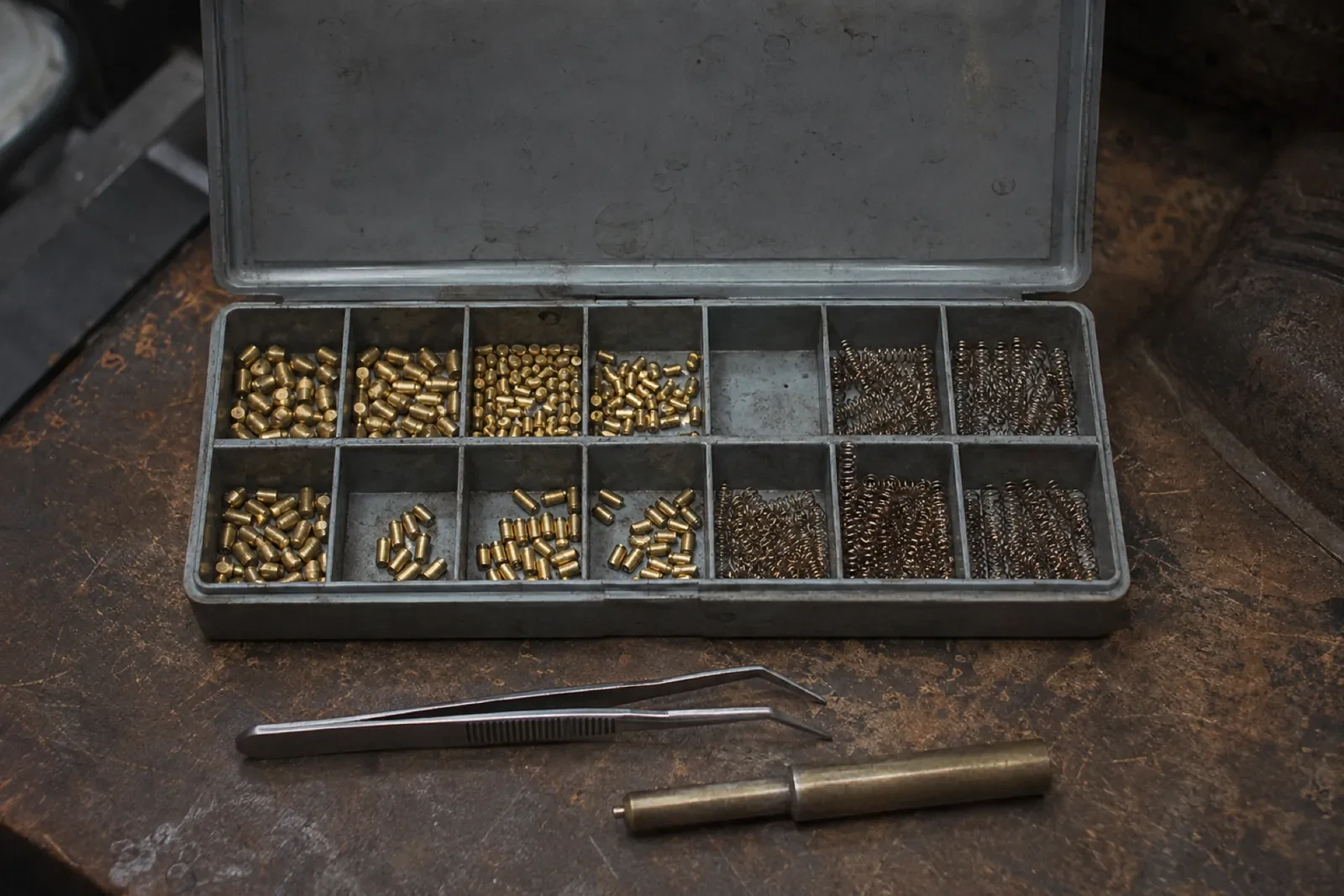
Open metal case with brass pins and coiled springs sorted in small sections, with tweezers and a brass tool in front.
  1. Scene 1

    Who needs to open what

    Before any hardware is chosen, the locksmith records the organization's actual shape: which roles, departments or shifts need access to which doors, including exceptions such as a bookkeeper who needs the records room but not the loading dock. This map is built with the owner or manager, not guessed from existing keys, since existing keys often reflect years of ad hoc copying rather than any real plan. The output is a plain list of who should open what, which becomes the target the rest of the design is measured against, well before a single cylinder is touched or a key is cut.

  2. Scene 2

    Fitting or replacing hardware to match the plan

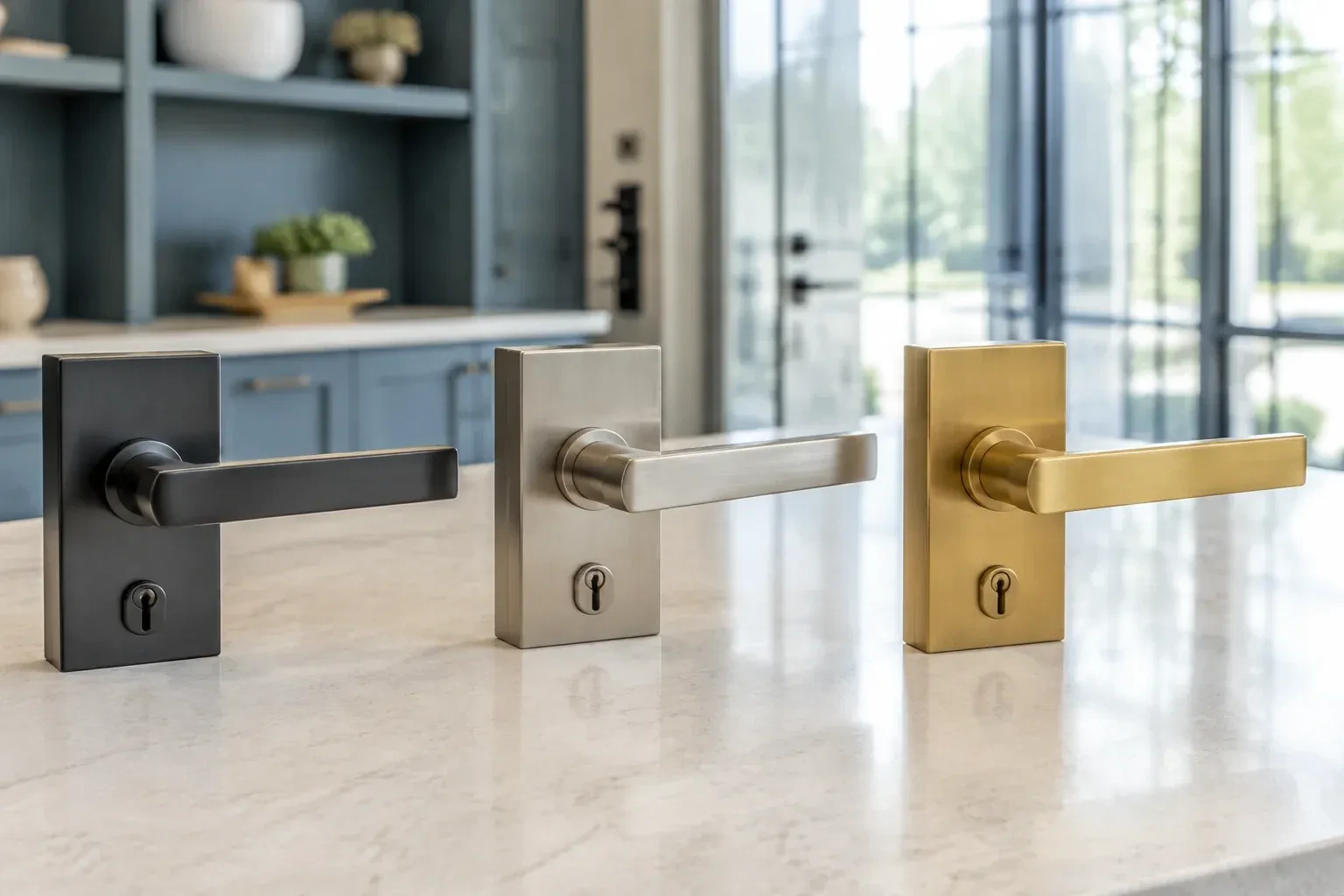
    Cylinders that can join the new hierarchy without modification are pinned in place; those that cannot, whether because of age, a mismatched keyway or simple wear, are replaced with compatible hardware chosen to match the finish and function already on the door. Locksets on a barrier-free path of travel are fitted with lever or paddle-style hardware that can be operated with a closed fist, keeping those doors usable for everyone while still carrying their assigned level in the same hierarchy as the rest of the building.

  3. Scene 3

    Handing the record to whoever administers it next

    The chart, the issuance log and any spare keys are handed to a named administrator, not left as loose paperwork or scattered across whoever happened to be present. If that role changes hands, custody of the record moves with it deliberately, along with a signed acknowledgement of what is being transferred, so the system's history does not quietly disappear along with the person who used to manage it.

In the van

  • Cylinder pinning kit
  • Key cutting machine
  • Cylinder decoders
  • Compatible replacement cylinders
  • Key marking tools

What shapes the quoteHeritage Park Locksmith Specialists

Administrator training and handover time
Walking the named administrator through the chart, the issuance process and how to handle a future lost key or new hire takes a defined amount of time on the day of handover, and a more detailed walkthrough for a larger, multi-level system takes longer than a simple one.
Working around an occupied, operating property
Rekeying doors in a planned sequence so a business keeps operating throughout, rather than all at once, takes coordination with the owner's schedule. Properties that need this staged approach, with interim arrangements for doors mid-conversion, add planning time beyond a straightforward, all-at-once installation.
Keyway chosen: standard or restricted
A restricted or patented keyway costs more in blanks and administration than a standard keyway, since duplication is controlled through the manufacturer's authorized record rather than cut anywhere. Higher-risk doors, such as records or cash rooms, often justify that additional control; lower-risk doors may not.
FeesSame any hour

Have it ready

Before you call · 0 / 3

(226) 806-0416

You asked, we answered

What happens to the old keys once a new system is cut?

Once the new pinning is tested and confirmed working, the old keys no longer operate the cylinders they used to, whether or not they are physically collected back. Collecting them anyway is good practice, since it closes the loop on how many old copies were in circulation and lets the business retire them rather than wonder where they ended up.

What should I have ready before the assessment visit?

A rough list of who currently has access to which doors, any existing keys or cylinders you can point to, and a sense of upcoming changes such as new hires, a department split, or a unit due to open. None of this needs to be exact; the assessment is partly built around confirming or correcting whatever the business already assumes about its own access.

Who should hold the top-level master key?

As few people as the business can genuinely operate with. Every additional holder is another way a full-access key can be lost, borrowed or copied without anyone deciding that should happen. A useful test during design is asking, for each proposed holder, whether they need to open every single door on the property or only a defined group; the second answer usually points to a sub-master instead.

Kitchenerinformation

WaterlooOntario

Master Key System Design · Bridgeport, Heritage Park, Rosemount, Stanley Park

Town
Kitchener, Waterloo
In business
25 years
Hours
Open 24/7
Nights, weekends and holidays, same fees
Visits
On-site assessment preferred. Request a visit or call.

2021 census: what it means at the door

Every square is one home in a hundred.

  • 49 in 100 homes · mixed ages
  • About 49% of homes in Kitchener were built in 1980 or earlier, according to the 2021 Census.In areas with homes from many decades, a locksmith gets to match the solution to the house rather than apply one answer everywhere. Period hardware stays on the houses that suit it; modern security goes where the door and the household want it.
  • Single-detached houses make up about 48% of homes in Kitchener (2021 Census).In a mixed area, a locksmith's advice bends to the building. For a house, the side door and garage entry get attention. For an apartment, the suite door's closer, strike and viewer do. The principle is the same: look at how the door is actually used.

Source: Statistics Canada, Census Profile

Open Kitchener in Google Maps

On-site assessment

Request a visit.

A property manager taking over a small commercial building inherits a shoebox of keys with no labels and no chart.

(226) 806-0416, open 24/7.