Sound familiar?Kitchener
- The call
- The kitchen delivery door gets shouldered open more than a hundred times a shift, and lately the latch slips past the strike plate instead of catching it on the first push.
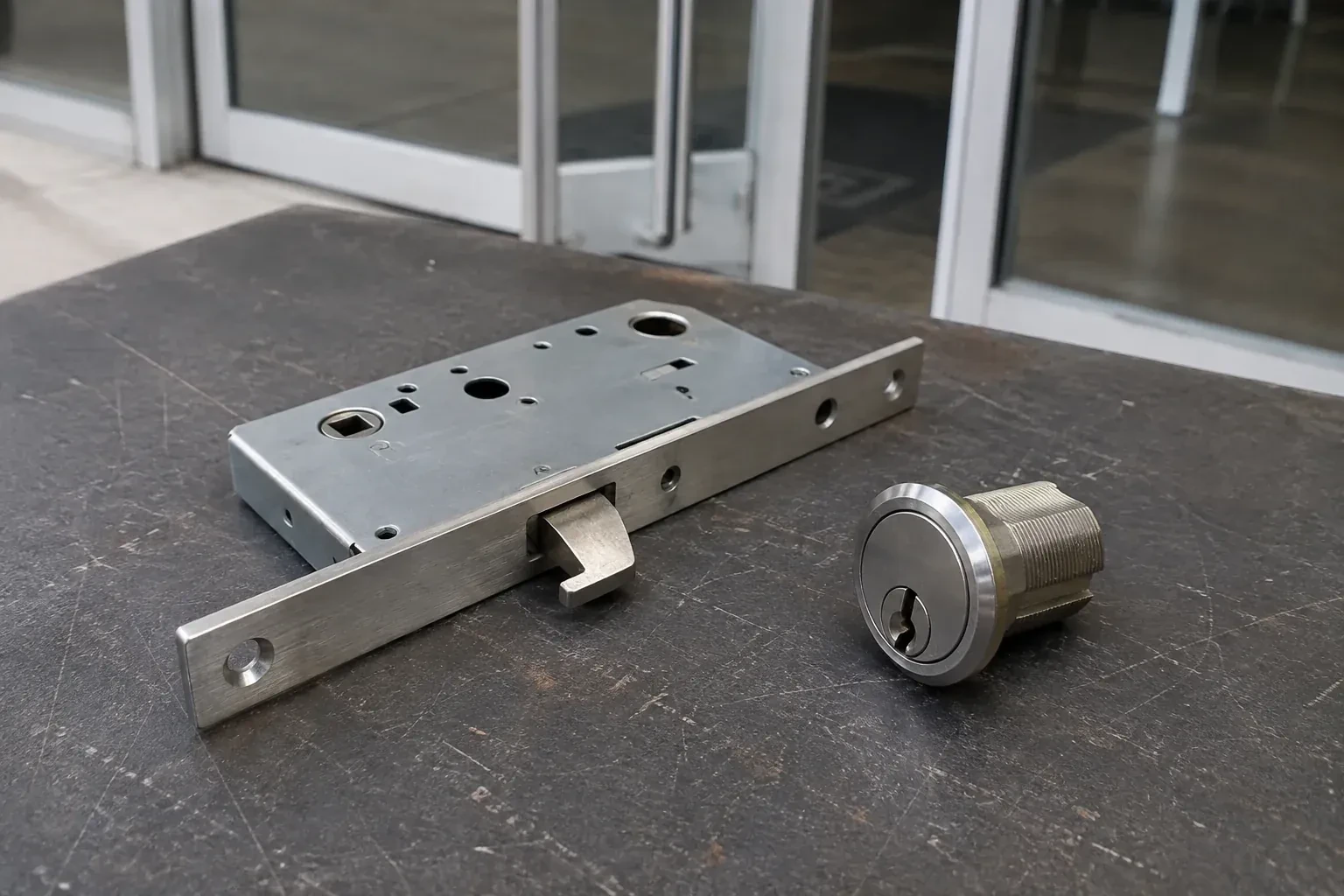
The kitchen delivery door gets shouldered open more than a hundred times a shift, and lately the latch slips past the strike plate instead of catching it on the first push.
Businesses often reach this service after something specific happens: a break-in, a departing employee holding a working key, a lease turnover, or an inspector's note about the rear exit. Whatever the trigger, the work itself follows the same order. The locksmith assesses the door and its current hardware, agrees with an authorized contact on the keying the new lock should follow, fits hardware rated for the opening's construction and use, and connects it to anything else already wired into that door, such as an alarm contact or an access-control reader, before testing and handing the keys over.
Sound familiar?Kitchener
Commercial-Grade Lock Replacement · Kitchener
Scene 1
Before any hardware is opened up, the locksmith confirms who is speaking for the business: an owner, a property manager, or a staff member the account recognizes as authorized to order and pay for the work. On a multi-tenant building this also means confirming which doors belong to which lease. This step exists for the same reason a home lockout starts with identification: a business's security is only as good as its record of who was allowed to change it, and a clear authorization at the start keeps that record clean.
Scene 2
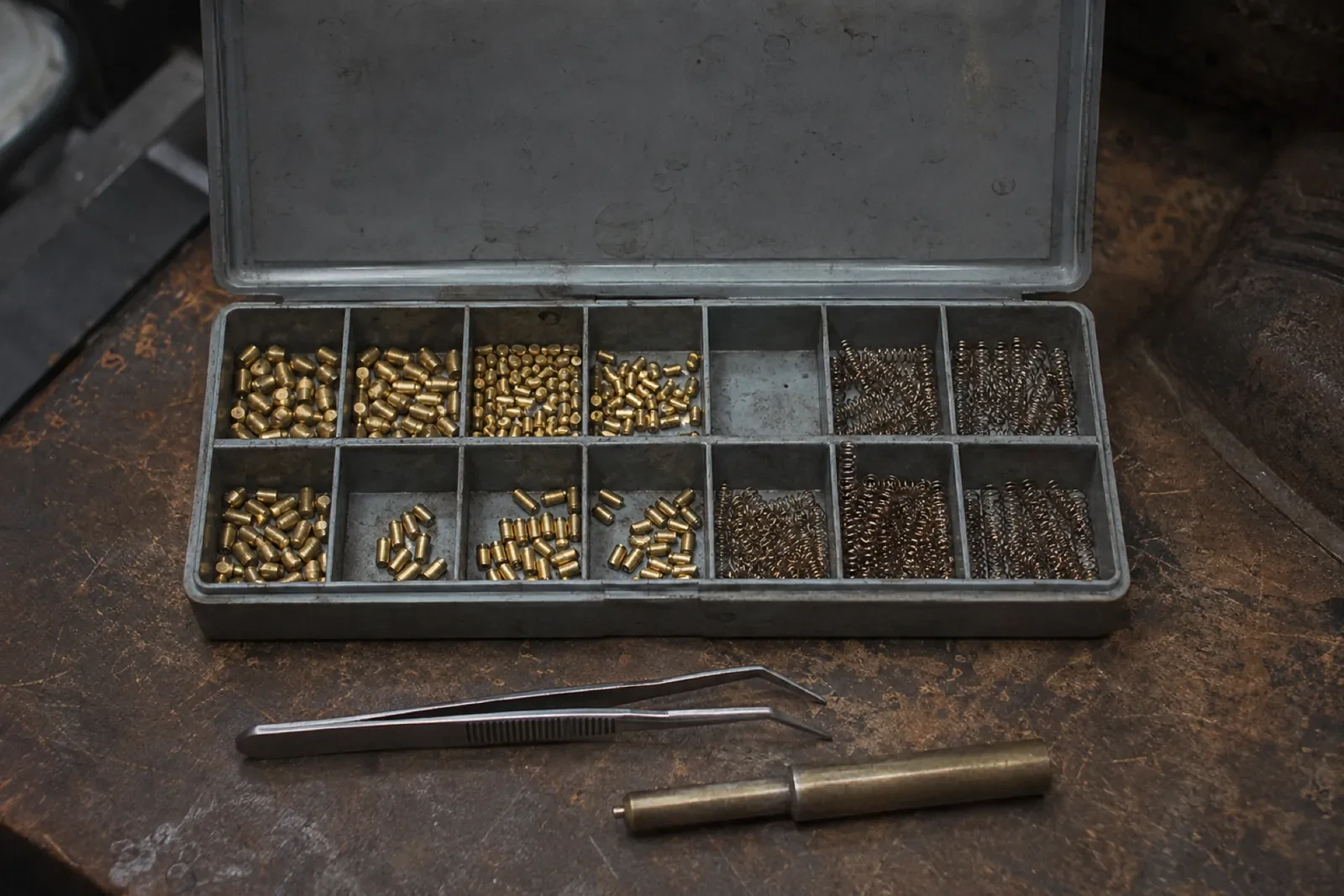
The cylinder installed is the one agreed during the assessment: keyed into an existing master or grand-master system, set up as a new interchangeable core the business can rekey itself later, or cut to a restricted keyway that limits who can order duplicate keys. Where several doors are being brought onto one system in the same visit, cylinders are combinated so a single key or a defined set of keys operates every door that is supposed to share access.
Scene 3
With current hardware and an accurate key-control record in place, the business is better positioned for whatever comes next: adding a location to the master key system, upgrading a single door to an interchangeable core so staff can rekey it without a service call, or answering an insurer's or landlord's question about what security is on a given door. None of that requires starting from scratch, because the replacement visit leaves behind hardware and documentation that a future decision can build on directly.
What shapes the quoteHeritage Park Locksmith Specialists
FeesSame any hour
Yes. An electric strike has to suit the latch or deadlatch type it will receive, the door's handing and swing, and whether the application needs fail-safe or fail-secure operation, meaning whether the door should unlock or stay locked if power is lost. Choosing a strike without checking these against the mechanical lock is a common reason a door releases electronically but still binds mechanically.
That is entirely your choice. Some businesses keep old hardware briefly in case a spare part is needed elsewhere on the same system, others prefer it removed from the site straightaway, particularly after a break-in where the damaged pieces are no longer wanted around. The locksmith can leave it with you or take it away, whichever you prefer.
This depends on the lease and on which doors are involved. A tenant can generally arrange work on hardware inside their own leased space, while entry doors, shared corridors and building-wide systems usually involve the property manager or landlord, since a change there can affect other tenants' access as well. Confirming this before the visit avoids hardware being installed that has to be redone.
WaterlooOntario
Commercial-Grade Lock Replacement · Bridgeport, Heritage Park, Rosemount, Stanley Park
Every square is one home in a hundred.
On-site assessment
The kitchen delivery door gets shouldered open more than a hundred times a shift, and lately the latch slips past the strike plate instead of catching it on the first push.
(226) 806-0416, open 24/7.
On-site assessment preferred · (226) 806-0416, open 24/7