Skip to content
HeritagePark Locksmith SpecialistsOpen 24/7 (226) 806-0416
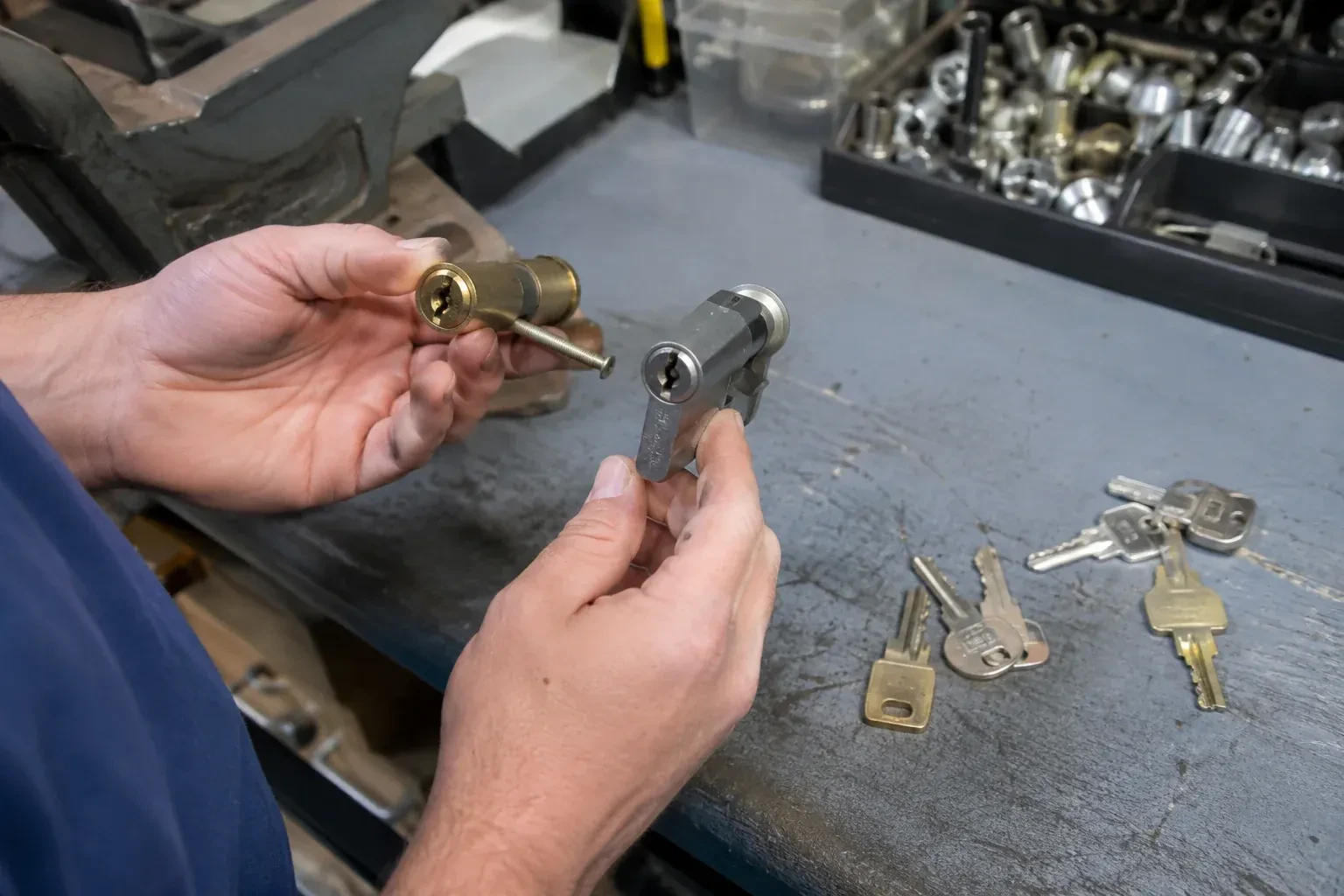
Hands comparing detached lock cylinders beside loose keys on a workbench. — Broken Key Extraction, Kitchener

Lockouts · Kitchener

Broken Key Extraction

The key went in like any other morning, you turned it, and something gave with a small metallic click. The bow is still between your fingers.

In plain words

Freezing is one of the bigger seasonal causes of broken keys here. Meltwater runs into the keyway during a thaw and freezes overnight, so the plug is locked in ice, and most people respond by turning harder. The blade gives before the ice does. A winter extraction visit therefore begins with thawing: lock de-icer or gentle warmth frees the plug, then the fragment is drawn out and the cylinder is dried and given the lubricant its maker specifies. You leave with the piece out, a new key cut, and a small tube of de-icer so the next frozen morning is a pause rather than a snap.

Sound familiar?Kitchener

The call
The key went in like any other morning, you turned it, and something gave with a small metallic click. The bow is still between your fingers. The rest of the blade is sitting inside the deadbolt, and the door is locked.
NextHow the visit goes

Broken Key Extraction · Kitchener

How the visit goes

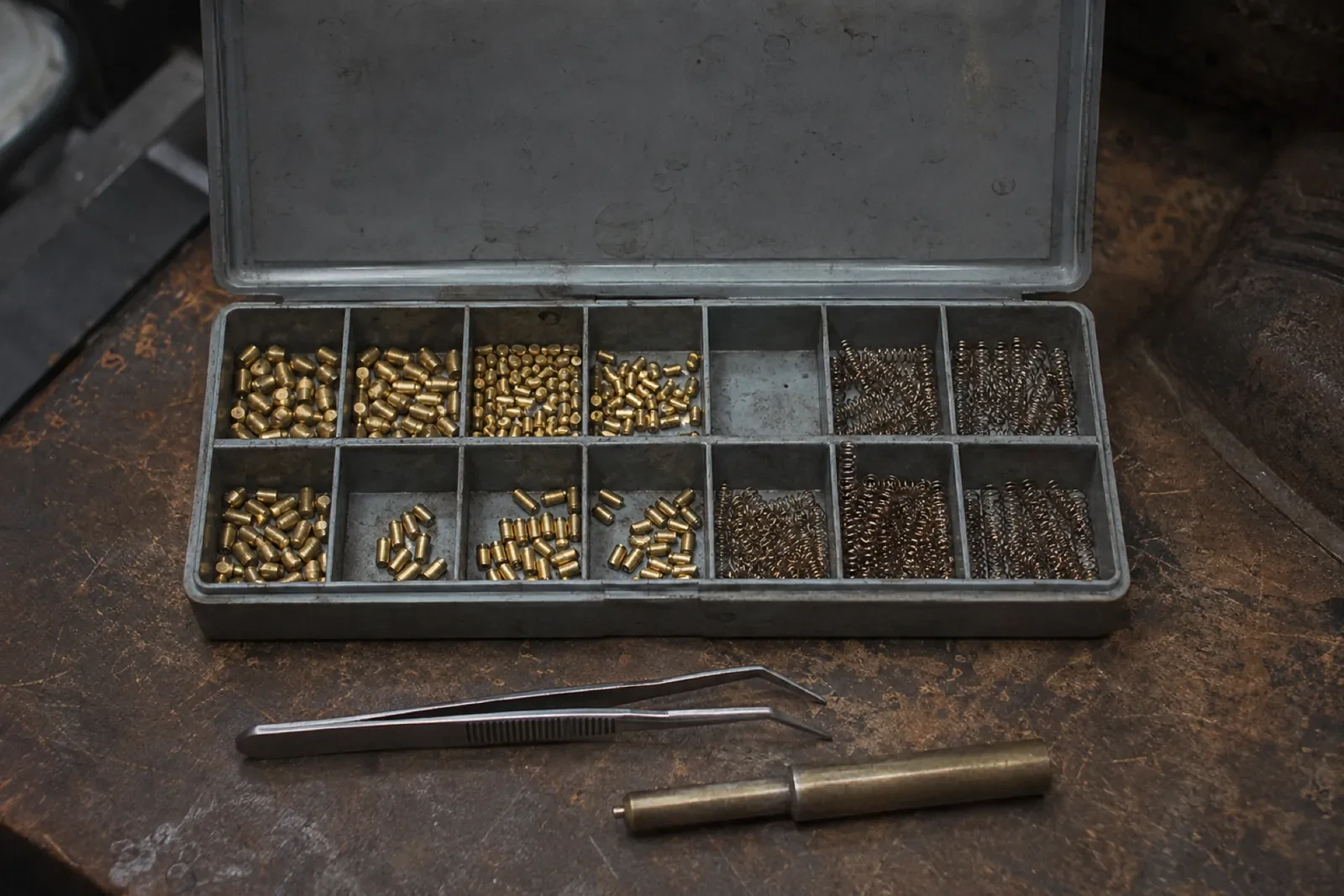
Open metal case with brass pins and coiled springs sorted in small sections, with tweezers and a brass tool in front.
  1. Scene 1

    Reading the cylinder for the cause

    Even a lock in good order can break a key that was already worn, bent or fatigued, so the cylinder is examined for a contributing cause all the same. The locksmith looks for grit and salt crust in the keyway, a cylinder cap that has loosened and let the plug shift, pins that have worn flat so the key needs force to lift them, springs that have weakened, and burrs at the mouth of the keyway that drag on the blade. On an exterior door the strike and hinges are checked as well, since a bolt that binds in its pocket makes the key carry the load. Each finding shapes the advice given once the fragment is out.

  2. Scene 2

    Drawing it out with a hook extractor

    Every keyway has grooves, called wards, that run along its length above and below the blade. A hook extractor is a slim strip of spring steel thin enough to ride in one of those grooves beside the fragment. The locksmith slides it in past the broken piece, rotates it slightly so the barbed tip catches a cut in the blade, and draws it back out in a straight line. The pins are lifted clear as the piece passes them, exactly as they are when a key is withdrawn. It is a patient, felt process, and the cylinder is untouched by it.

  3. Scene 3

    A lock that turns like it should

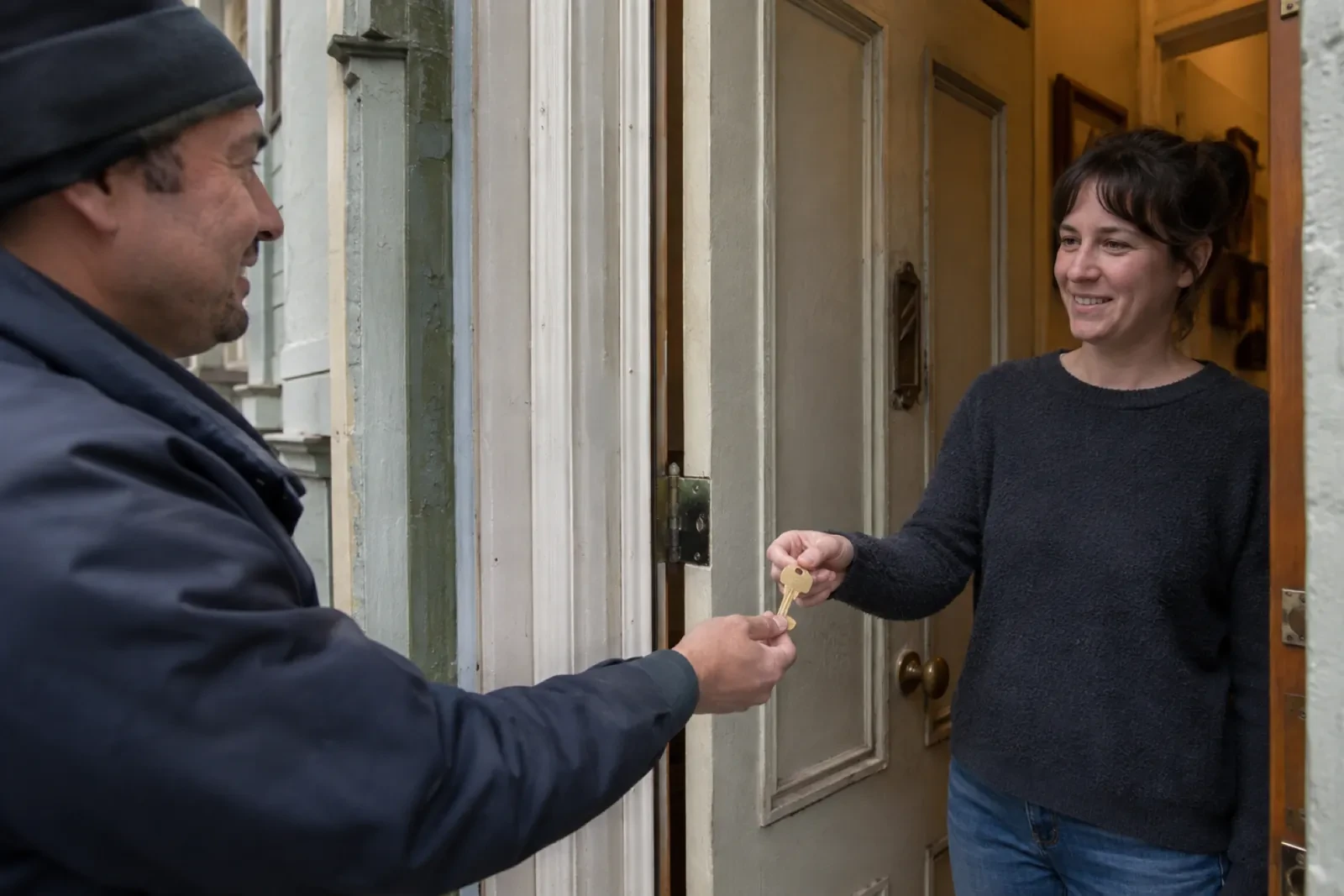
    The visit closes with the lock proving itself. The new key goes in fully, turns through its full travel and comes out without a catch, from both sides, first with the door swung open, then with it shut against the strike. The bolt is watched seating fully in its pocket. You are shown the fragment that came out and told what condition the cylinder was in. Anything the locksmith noticed, a strike screw backing out or a hinge that has dropped, is pointed out so it is not a surprise later. The door is locked with your own new key as the last act of the visit.

In the van

  • Lock de-icer
  • Key blanks and code cutter
  • Manufacturer-approved cylinder lubricant
  • Replacement cylinder or deadbolt
  • Spiral key extractors

What shapes the quoteHeritage Park Locksmith Specialists

Where the key broke
A house deadbolt, a knob, an older mortise case, a padlock, a car door and a vehicle ignition each call for different access and different care, and the quote follows the hardware.
Number of keys cut
Copies are counted individually. One replacement for a single occupant and four for a household are different lines, and you choose the number on the spot.
Door or strike adjustment
When the key broke because the bolt was binding in a swollen or sagging door, correcting hinges, strike or weatherstrip is offered and quoted as its own item.

FeesSame any hour

Have it ready

Before you call · 0 / 3

(226) 806-0416

You asked, we answered

Why did my key break at all?

Often fatigue, though not the only cause. A brass blade is weakest where the deepest cut leaves the least metal, and thousands of turns can slowly work a crack into that spot. Then one morning something asks more of it: a frozen cylinder, a bolt binding in a swollen door, grit in the keyway, or turning before the key was fully in. A bent, worn or poorly cut key can also fail on its own, with no such trigger. The lock is inspected afterwards to find which applied.

My key is a restricted or high-security type. Can it still be extracted and replaced?

Extraction is the same careful process; the keyway is usually narrower and the cuts more complex, so it takes longer. The replacement key is different: restricted blanks are cut only from the system's records, so have the authorization card that was supplied with the system to hand, or the locksmith who installed it is contacted. Until then the spare, if you have one, keeps the door working.

Is a broken key a sign the whole lock is worn out?

Sometimes, and the visit answers it. A key that failed from its own fatigue in a clean, smooth cylinder says nothing against the lock. A key that broke because the pins were worn flat, the cap had loosened or the keyway was full of grit says the cylinder needs a service or a rekey. One that broke in a corroded, pitted plug is telling you the lock is due for replacement.

Kitchenerinformation

WaterlooOntario

Broken Key Extraction · Bridgeport, Heritage Park, Rosemount, Stanley Park

Town
Kitchener, Waterloo
In business
25 years
Hours
Open 24/7
Nights, weekends and holidays, same fees
Visits
On-site assessment preferred. Request a visit or call.

2021 census: what it means at the door

Every square is one home in a hundred.

  • 49 in 100 homes · mixed ages
  • About 49% of homes in Kitchener were built in 1980 or earlier, according to the 2021 Census.In areas with homes from many decades, a locksmith gets to match the solution to the house rather than apply one answer everywhere. Period hardware stays on the houses that suit it; modern security goes where the door and the household want it.
  • Single-detached houses make up about 48% of homes in Kitchener (2021 Census).In a mixed area, a locksmith's advice bends to the building. For a house, the side door and garage entry get attention. For an apartment, the suite door's closer, strike and viewer do. The principle is the same: look at how the door is actually used.

Source: Statistics Canada, Census Profile

Open Kitchener in Google Maps

On-site assessment

Request a visit.

The key went in like any other morning, you turned it, and something gave with a small metallic click.

(226) 806-0416, open 24/7.